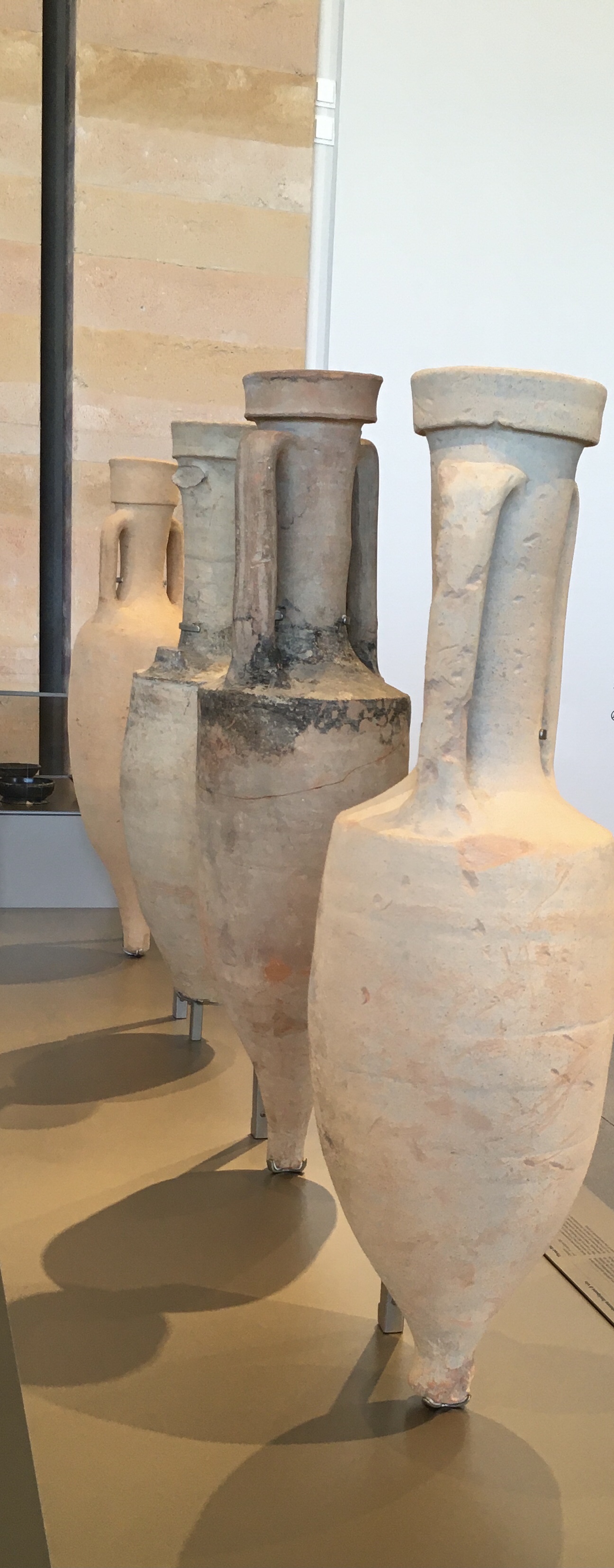
The new museum of Roman history in Narbonne, NARBO VIA, has been a tantalising presence on the cultural landscape of the town for more than 11 years. The idea of a major new museum in Narbonne, erstwhile capital of Gallia Narbonensis, major port and vital crossroads in ancient times, was first mooted in 2010. Since then the project has been heralded as one of the most important cultural developments in the South of France. In 2012 it was announced that the new building would be designed by Foster and Partners. If the designers of the Great Court of the British Museum were in charge of the building then this was indeed a big deal.

The first stone was laid in 2015 and as the building grew so did our excitement. Originally called MuRéNa, Musée de la Romanité Narbonne, it promised to be the definitive museum of Roman history in the region if not the entire South of France. The budget for the new project was nearly 50 million euros with an annual budget in excess of 3 million euros. We had cause to be excited and to expect something special. Now called NARBO VIA the museum was due to open in December 2020 but because of the pandemic didn’t actually open until May 27 2021. We immediately bought our tickets, anxious to be a part of this exciting cultural event that promised to bring the first Roman colony founded in Gaul in 118BCE spectacularly to life and to play a major role in the cultural life of the modern town. We were also anxious to see the much lauded building and surrounding area. This is what Foster and Partners had said:
“Named NARBO VIA, the scheme seeks to form a new landmark for the city, with gardens and landscaping taking inspiration from Roman courtyards. The scheme will feature an open-air amphitheater for events and displays, and a strengthened connection between the museum and adjacent Canal de la Robine via a new pedestrianized ramp.”
It would be safe to say our expectations were extremely high. The day of our visit arrived. We drove into Narbonne but couldn’t find any signs showing where you could park. It looked as if there was a car park next to the museum but once we’d turned into it it was obvious this was a staff car park and we had to turn round and leave. We gave up and found a parking place nearby. Walking up to the entrance I couldn’t see any landscaping that took inspiration from Roman courtyards just an area of rather sparse lawn with rows of trees planted in it. If there was an open air amphitheatre it was so amazingly well integrated in to the landscape that I didn’t see it. Eager to see how the the connection between the museum and canal had been strengthened I walked in that direction only to be prevented from going anywhere near the canal by the sort of chain link fence that might surround a tennis court. The gate in the fence was locked.
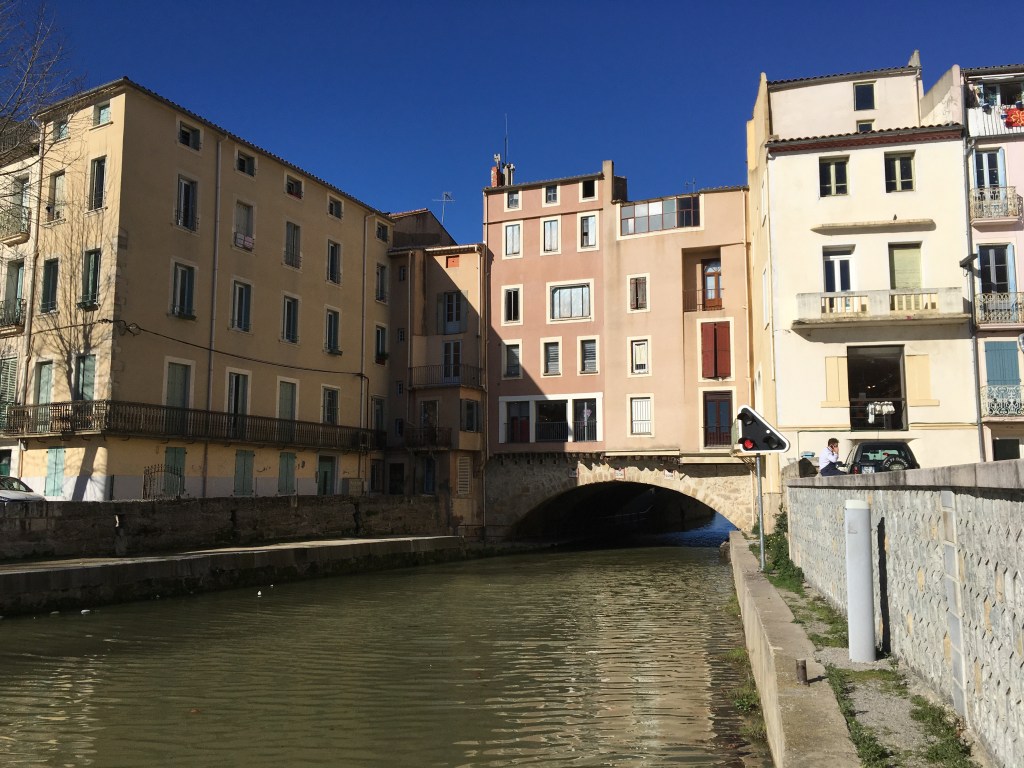
First impressions count and I was already feeling a little deflated. At the entrance there was nothing to suggest I was about to visit a brand new landmark museum. No banners, no signs, no excited museum staff oozing with enthusiasm. Just an empty, sterile foyer with a desk behind which sat two rather uncommunicative people who gave us styluses to use on the touch screens in the museum as a COVID safety measure. They needn’t have bothered, the touch screens had crashed and no amount of stabbing with the rubber tip made any difference. They also advised us to look at the map and timeline of the history of Narbonne.
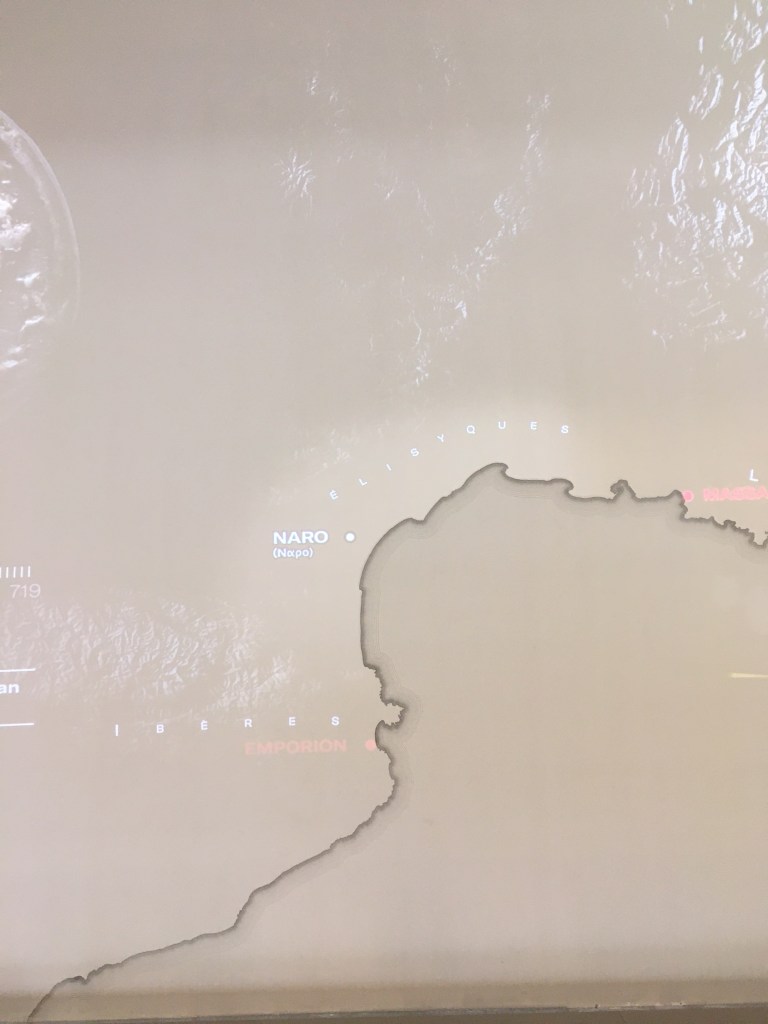
This was fascinating. Projected onto the wall the map and associated timeline charted the history of the town. Next to it was a milestone dating from the foundation of the colony in 118BCE. The milestone bears the oldest inscription in France and symbolises Gaul’s integration in to what would later become the Roman Empire. The map and timeline were well done but only showed a small geographic area. I wanted to see the bigger picture. I wanted to know how Narbo Martius related to the rest of the Roman world. How could I judge its importance if I couldn’t see it in context? I felt as if I were only being told a piece of the story. However, the map did promise a story. My interest was piqued. I wanted to continue.
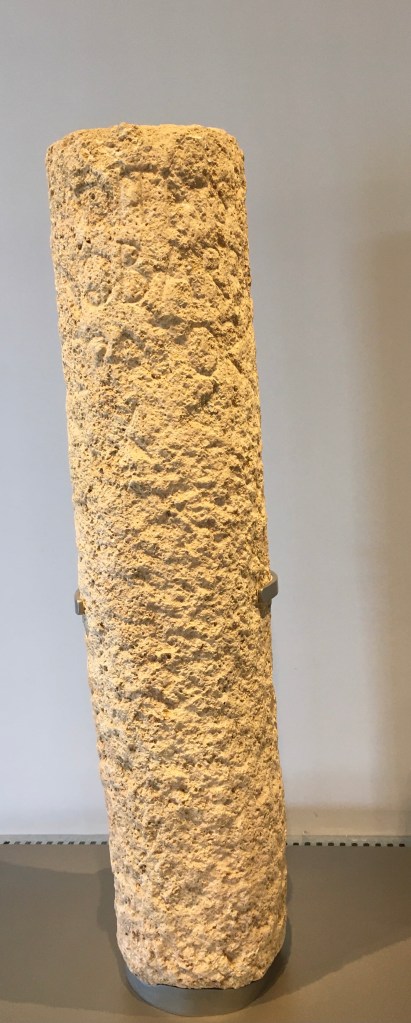
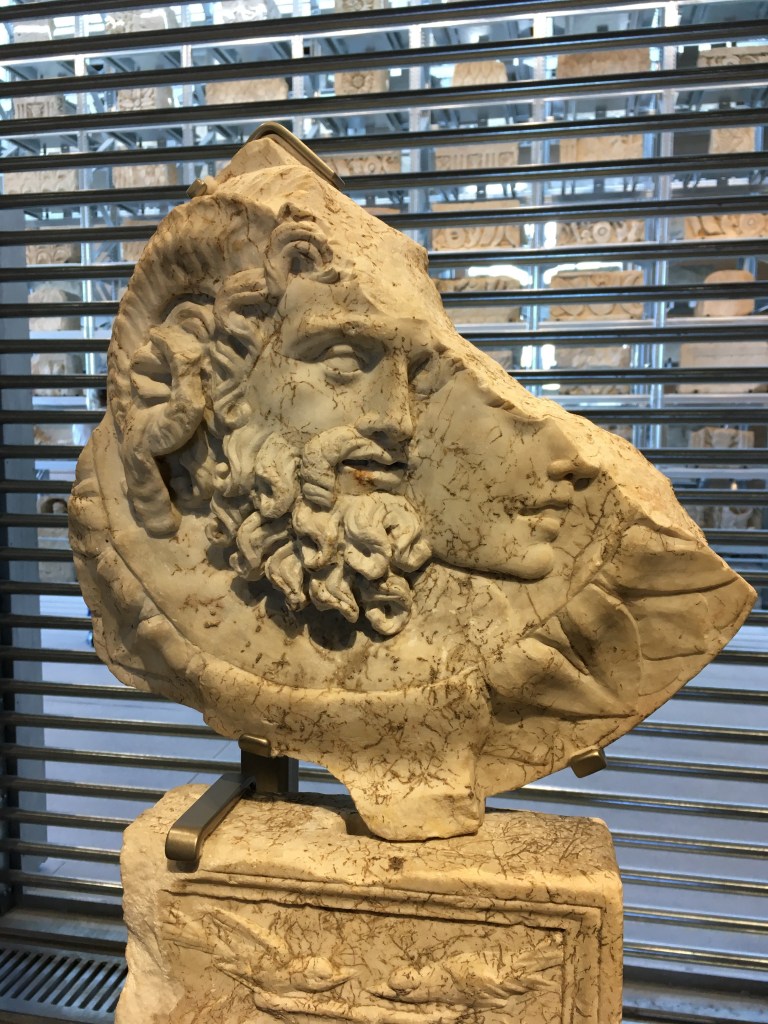
Today the town of Narbonne is a delightful medium size provincial town. It has a beautiful cathedral, magnificent medieval town hall and many attractive squares. It has, however, very few Roman remains. Everything was destroyed and the stone reused. Unlike Nîmes or Arles or Orange, there is virtually nothing that bears witness to the importance and beauty of the town in ancient times. There are fragments of temples, frescoes, statues and particularly blocks of stone many with beautiful carvings but apart from underground grain stores that’s it. The beautiful white marble town of Narbo Martius has gone. The museum is therefore vital. Starting with the extant artefacts a great story is ripe for the telling.

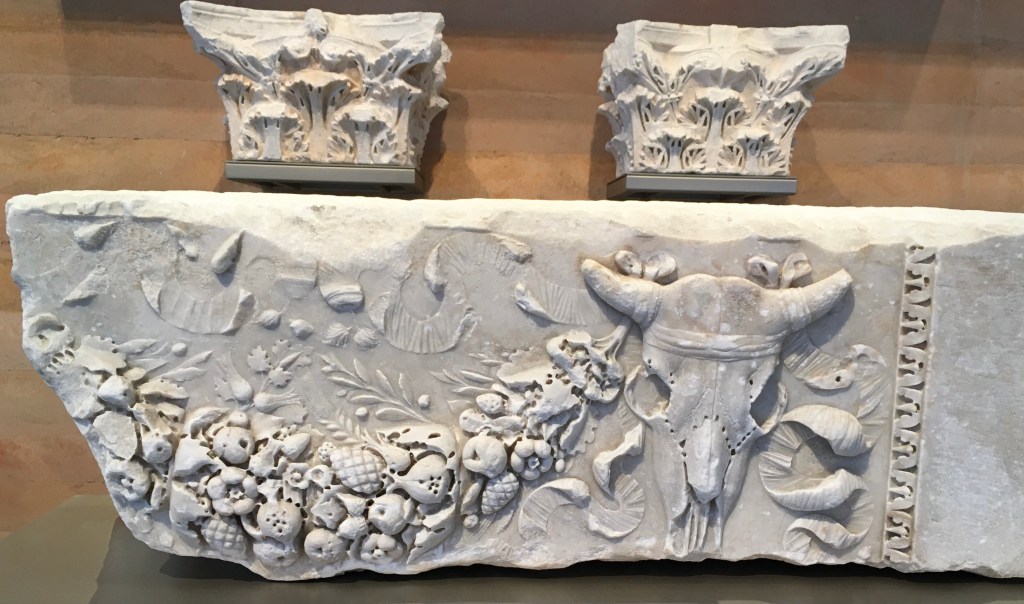
The map and timeline were a good way to start. I was ready for the next chapter. I flashed my ticket and entered the museum proper. Much of the collection of the museum consists of blocks of stones that had been pillaged from the Roman city and used to build the town’s medieval walls. When the latter were demolished the salvaged stones were put in a museum. Many, indeed most, of these blocks have beautiful and fascinating decorative carvings. In the museum they form a new wall which gives a nod to the medieval walls and takes up the entire length and height of the building. It is very impressive. Every so often an automated fork lift truck type system removes a block from its position and places it in an empty space which is surrounded by screens. The block is then analyzed with the help of photographs, simulations of how it may have appeared in the original building etc. It was a great way to see and understand the stones and the museum is justifiably proud of it. But, and for me this was a big BUT, I couldn’t see how this exhibit fitted in with the rest of the museum. It certainly didn’t link with the map and timeline I had just seen. It also seemed completely on its own and on reflection would have been much better viewed at the end of the visit as a kind of summary. I now struggled to find exactly where to go next. I did find the next room which contained some beautiful pieces of monumental marble mostly from temples. The explanations offering both the general history of the town and information about the individual pieces were well written, informative and all in French, English and Spanish. However, there was another but and it was a but that would stubbornly return in each room: why was I looking at this now? How did it link to what I’d just seen and where was I being taken next and why?
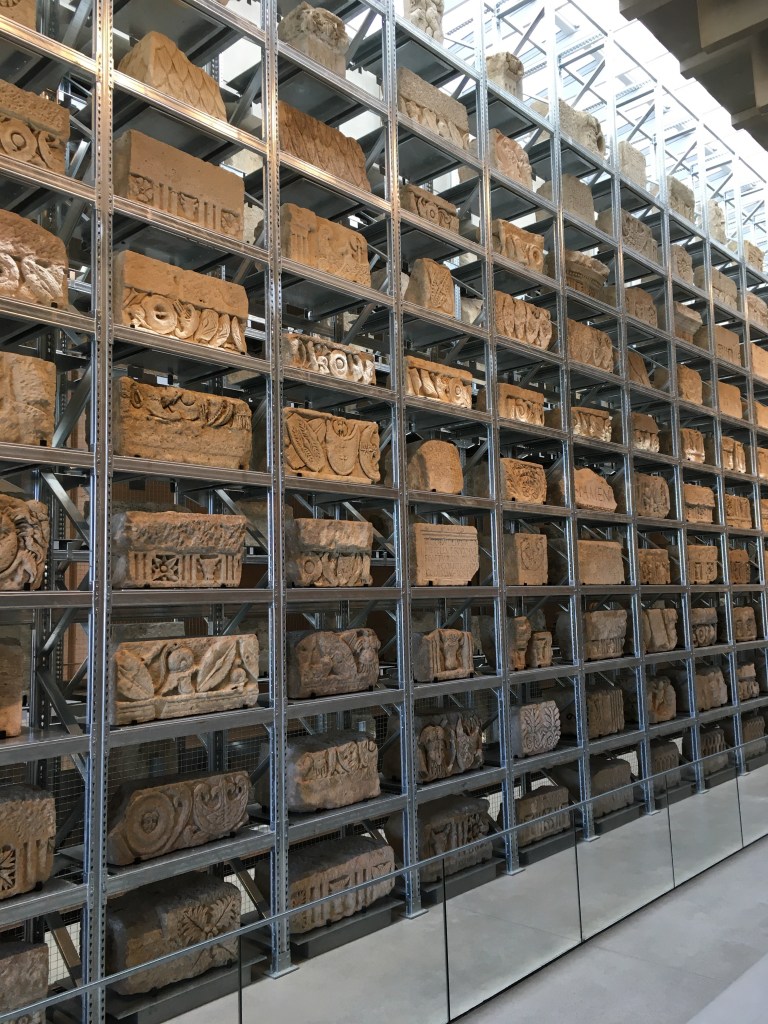
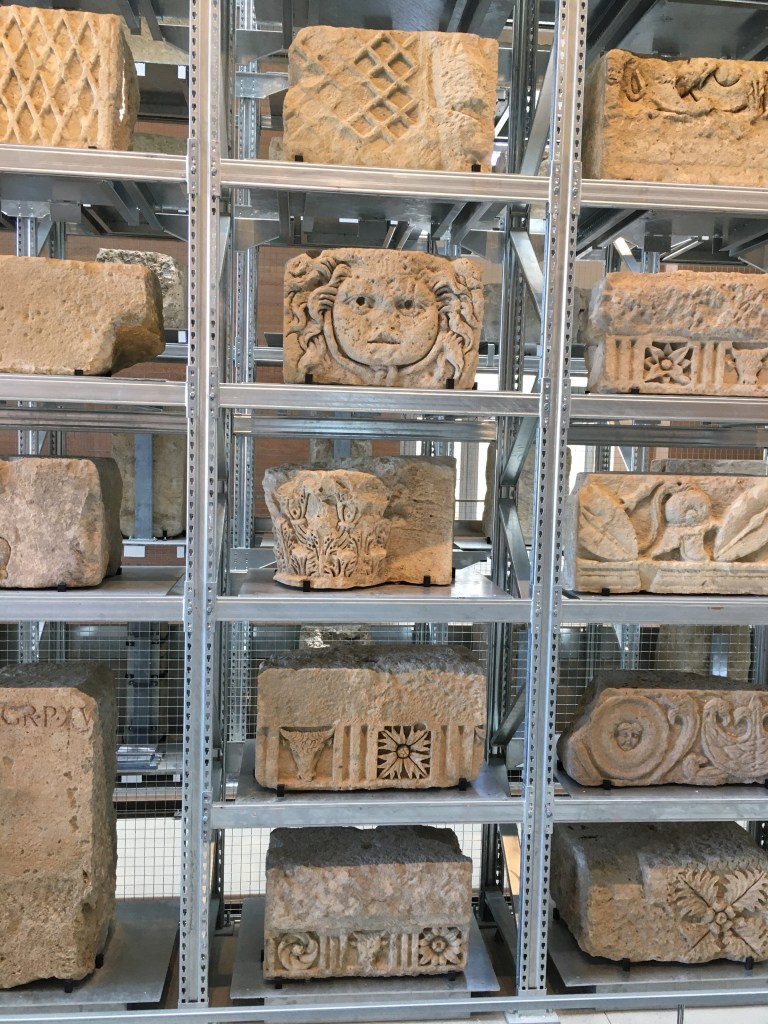
Each room or area was interesting and had some great exhibits but I found the visit disjointed and incoherent. I wanted Narbo Martius to live in my imagination and I was struggling.
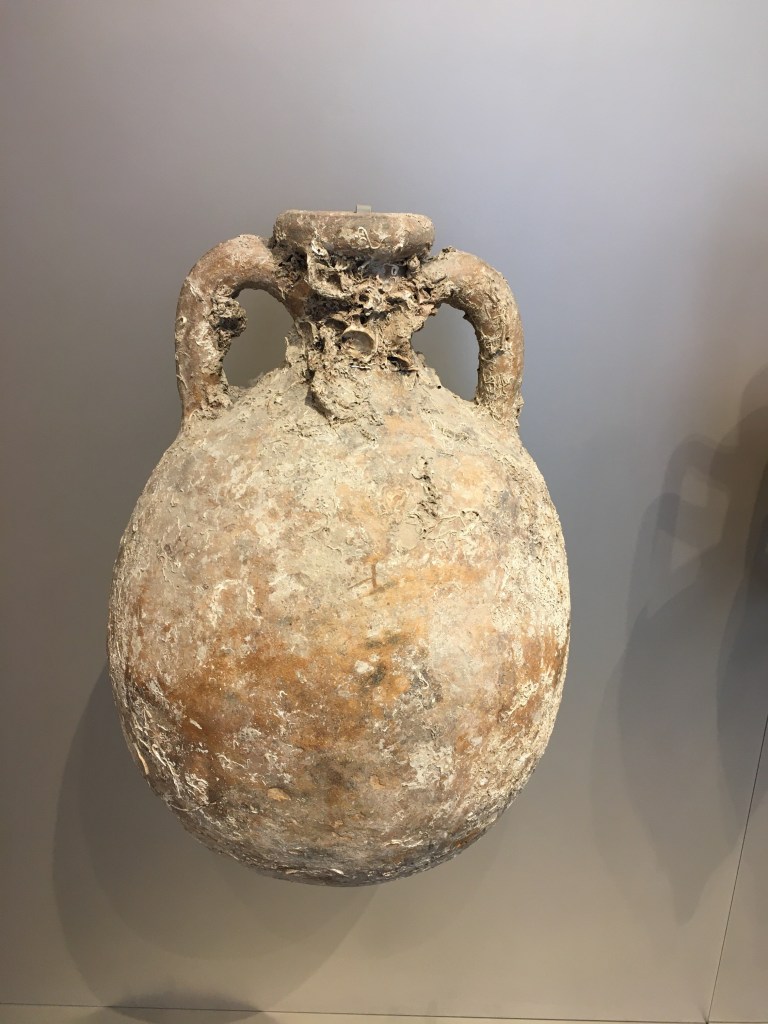
The section about the port and the ships was particularly puzzling. Firstly these exhibits were in two separate rooms as if they had nothing to do with each other or the rest of the town. The explanatory film and graphics were brilliantly done (here comes that but again) but I wanted more than just ‘Narbonne was a port and there had been impressive engineering to make it so’. I wanted to see trade routes and I wanted to know how the population of the town was affected by this trade from all over the Empire. I was feeling frustrated especially as the mosaic from the Narbo trading company’s offices in Ostia, the port of Ancient Rome, which I have marveled at so often, was one of the main projections in the room. As far as I could see there was no mention of it, no acknowledgement of Narbo’s importance in the wider context of the Empire. The promise that I thought the museum had made had not been kept. Narbo Martius had not been brought spectacularly to life.
A day that had begun with so much excitement and expectation was now clouded by bitter disappointment. Driving home, however, I began to wonder if the museum really was that bad. Had my expectations just been far too high? Could a simple provincial museum have ever met them?
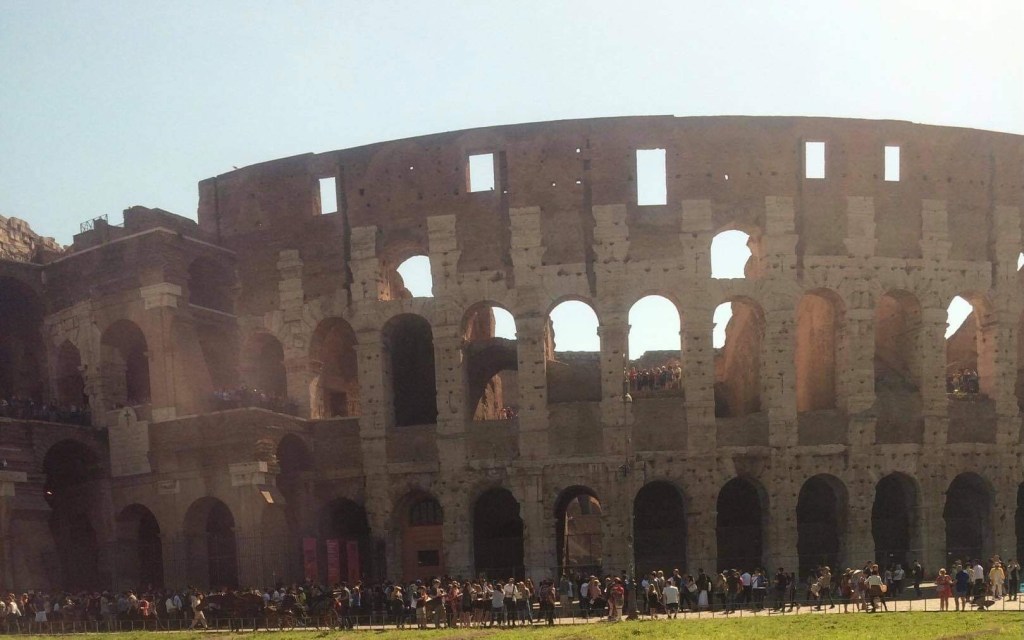
A big part of my job is about managing expectations. If students go to the Colosseum expecting to see something similar to what they’ve seen in the gladiator movie, they’ll be disappointed. If they go to see it after being told it’s a ruin that was partially destroyed in an earthquake, that the marble was raided to build Rome’s churches and there’s not a great deal left, they’ll be blown away by the scale of it, the amazing feat of engineering and the majesty of the ruins against Rome’s blue sky. The crowds of tourists will provide the buzz of the ancient spectators and the visit will have been a huge success and their expectations will have been exceeded.
I was guilty of not managing my own expectations. On further reflection the museum is an improvement on the old one. It does explain the history of the town. It does offer insights into the everyday lives of its citizens and I did have a better idea of how the city would have looked. The lapidary wall is a great way of exhibiting the blocks. I left the museum knowing more than when I went in and I’ll enjoy going back regularly. My criticisms, however, still stand. The opportunity to bring Narbo Martius vividly to life has been missed and it’s a shame. But (last one) it’s not that bad.
Visit my other pages:
 john-lionet-here-there-and-everywhere.com
A perspective on perceptions. Very difficult to guard your own.
Thanks for your analysis.
LikeLike